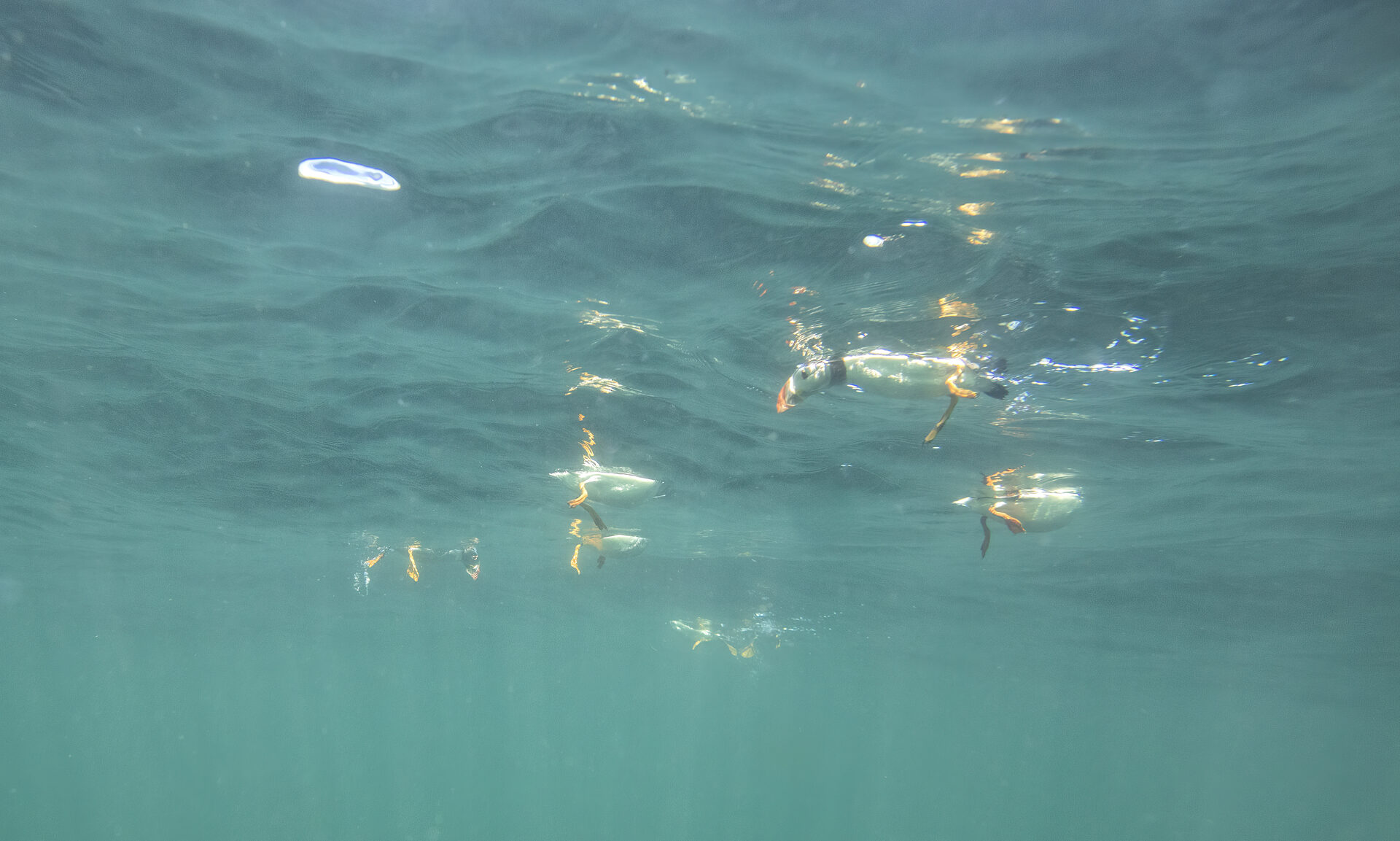
The Farne Islands in late June are a spectacle above water, tens of thousands of seabirds nesting on every ledge, puffins launching themselves into the air with their improbable, whirring wingbeats. But the real magic, I've always suspected, happens below the surface.
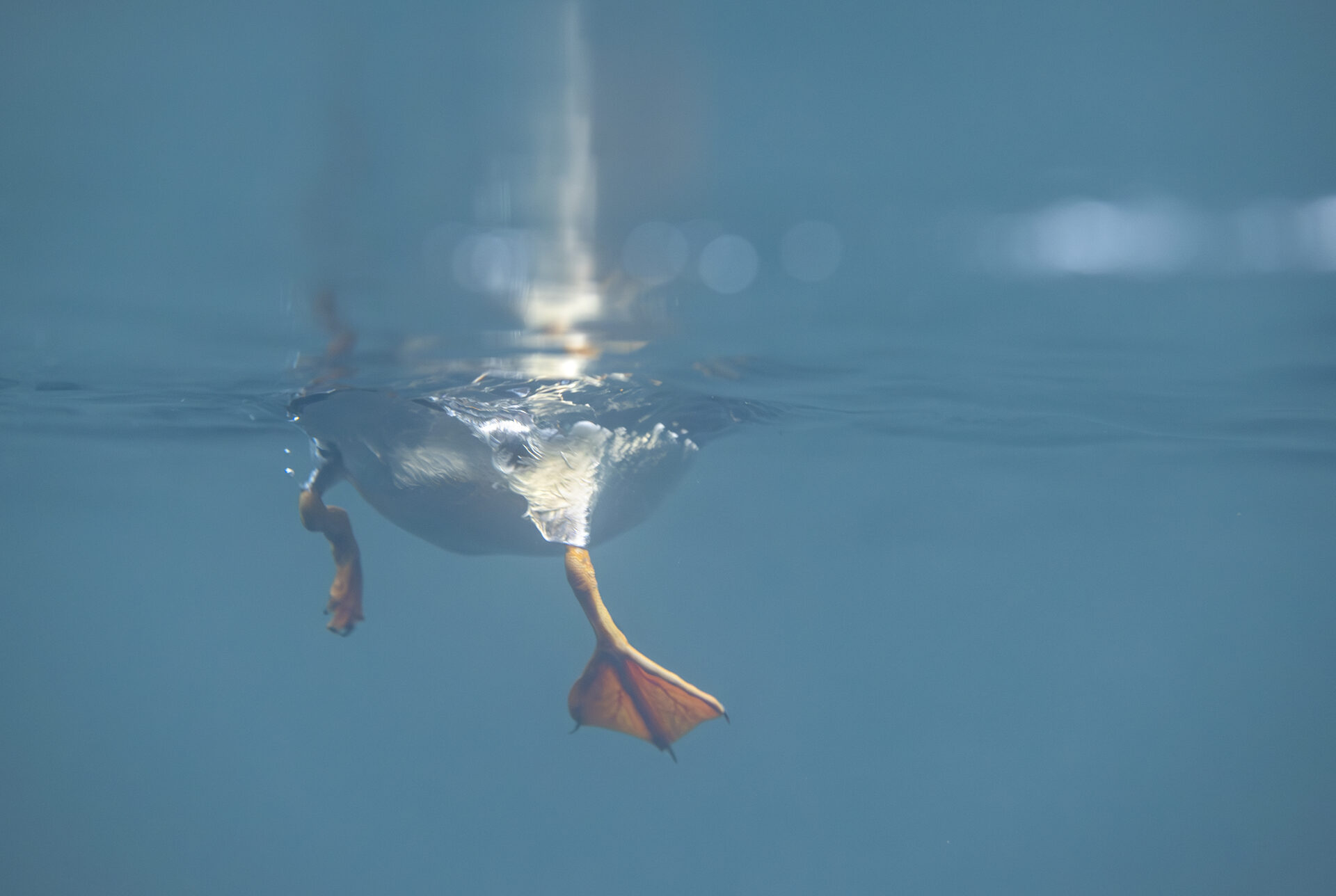
Atlantic puffins are extraordinary underwater. On the surface they look almost clumsy, short wings that seem designed for flight rather than swimming. But beneath the water they transform, using those same wings as flippers, corkscrewing and diving with astonishing precision to chase sand eels at depth.
"The water was 9°C. The visibility about four metres on a good day. Everything about the conditions was wrong for photography, which made getting the shot all the more satisfying."
The kit
I was using my Canon EOS-1D X Mark III in a custom waterproof housing, with a wide-angle dome port. The key challenge underwater is that puffins move incredibly fast, you have perhaps half a second from the moment one enters your frame to getting focus lock and firing. The 1D X Mark III's animal-eye tracking was the difference between coming home with images and coming home empty-handed.
The technique
Freediving rather than scuba is essential for this kind of work. Bubbles from a regulator terrify puffins and scatter the very birds you're trying to photograph. Holding your breath removes the noise and the disturbance, and allows you to get genuinely close.
The approach I use is what I think of as 'passive patience.' I descend to around three metres, find a stable position on the kelp, and become furniture. The puffins are hunting constantly, they have chicks to feed, and after a few minutes they begin to ignore you entirely. That's when the shots happen.
The moment
On the third day I had my best encounter. A puffin dived directly over my head, twisted sharply, and for one extraordinary second was motionless in the water about thirty centimetres from my lens, a sand eel crossways in its beak, looking straight at me with those extraordinary orange-rimmed eyes.
I fired. The image that came back was the one I'd been trying to get for three years.
Wildlife photography is often described as a waiting game. It is. But the wait is rarely wasted, every hour in the water teaches you something about the animal you're trying to understand. That understanding, I think, is what separates a photograph from a record shot.